
What to Do After a Gym Injury: The Claims Process Step by Step
The 48 Hours After an Incident Matter More Than Most Operators Realise
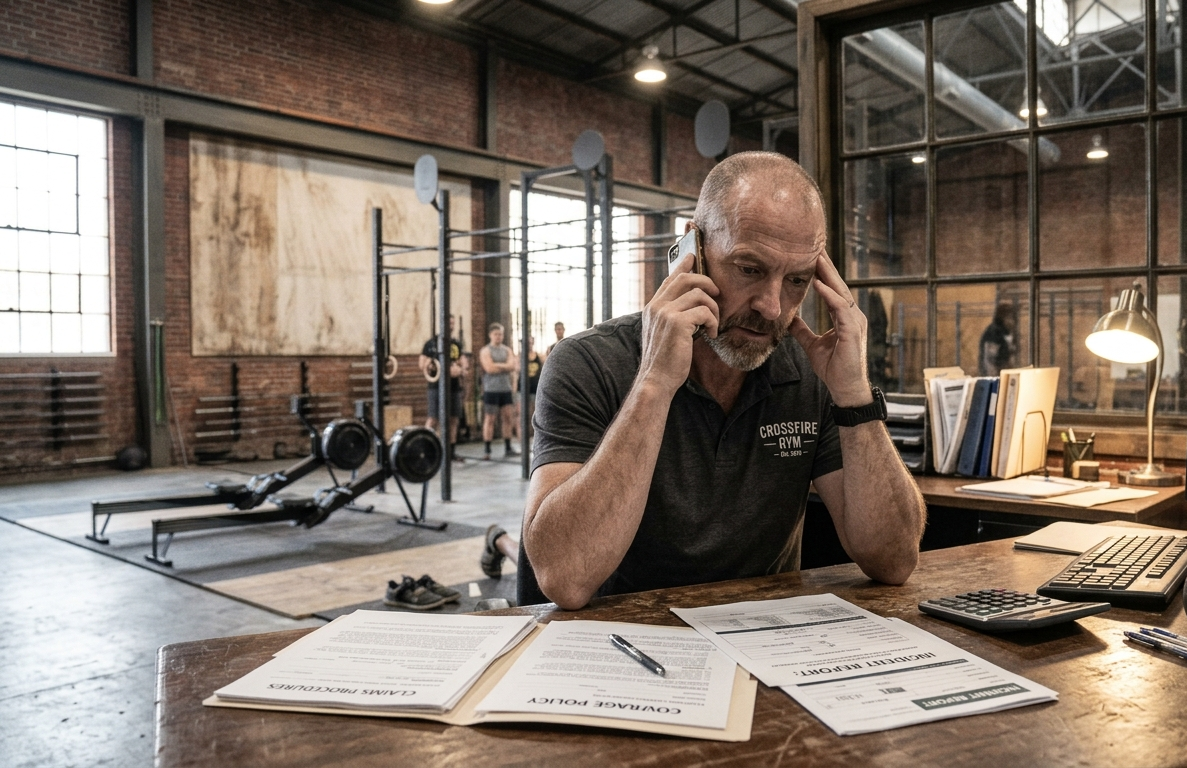
Most gym owners have never made an insurance claim. They have paid their premium, kept their policy current, and run a safe facility — and the day they need their insurance to actually work is the day they discover how little they knew about how to navigate it correctly.
The way you respond in the hours immediately after a gym injury can affect the outcome of any subsequent insurance claim significantly. The correct process is not complicated, but it is specific — and several of the most common instincts gym owners follow in these moments actively work against their own insurance position.
Step One: Attend to the Injured Person First
This is not just ethical — it is documented good practice that matters in the context of a subsequent claim. Show genuine concern. Administer appropriate first aid. Call emergency services if the injury is serious. Pause the session if necessary. Make sure the injured person is assessed by a qualified first aider and that they have access to any support they need.
How you responded to the person immediately after an injury is something any future claim investigation will consider. Treating the injured member as a liability problem from the outset, rather than as a person in your care, is both wrong and likely to escalate the situation.
Step Two: Notify Your Broker Immediately
Do not wait to see whether the injured person makes a formal complaint before you contact your broker. Notify your broker — Gym Insurance Brokers — of any incident that could potentially give rise to a claim, as soon as practicable after it occurs. This notification is important because many policies require prompt reporting, and delaying notification can affect your ability to make a claim later even if the policy was active at the time of the incident.
You can notify even if you are uncertain whether a claim will follow. Notification preserves your rights. The absence of notification limits them.
Step Three: Do Not Admit Fault
This is among the most consistent pieces of guidance from insurers and brokers — and among the most frequently disregarded by gym owners operating on instinct. In the immediate aftermath of an injury, many operators say something like 'I'm so sorry, that's our fault' or 'we should have caught that' — even when the situation is genuinely ambiguous.
Admitting fault — verbally, in a text message, in a social media post, or in any other form of communication — can compromise the insurer's ability to defend the claim. The insurer needs to assess what happened, determine whether your business has legal liability, and decide how to respond. An admission made before this assessment takes place undermines this process. Express genuine concern for the injured person. Do not say anything that constitutes an admission of responsibility.
Step Four: Do Not Hand Over Your Insurance Details
If the injured person, or a family member, asks for your insurance details immediately after an incident, do not provide them. This is specific, explicit advice from Gym Insurance Brokers — not because you have anything to hide, but because handing over insurance details in the immediate aftermath of an incident is not the correct process and can create complications in how the claim is subsequently managed.
Direct the person to contact you formally, and handle any subsequent communication through the proper channels with your broker's involvement.
Step Five: Do Not Offer a Financial Payment
Offering a financial payout to an injured member — even a small amount, even with completely good intentions — can be treated as an admission of liability. It signals to the injured party and to any subsequent legal proceedings that your business accepted responsibility for what happened. Do not offer money, regardless of how natural or compassionate the impulse may feel in the moment.
Step Six: Document Everything
Complete an incident report as soon as possible after the event — while details are fresh and witnesses are still available. Record what happened, when, during what activity, who was involved, who witnessed it, and what response was taken. Capture CCTV footage immediately and preserve it. Record any communication with the injured party. These records should be kept for a minimum of seven years, as claims in Australia can be made up to this period after an incident in some circumstances.
Step Seven: Follow Through With Genuine Care
After the immediate process is handled: follow up with the injured member genuinely. Ask how they are. Acknowledge the difficulty of the situation without making admissions. Pause their membership while they recover. Wish them a full recovery. A member who feels genuinely cared for is far less likely to escalate a situation than one who feels processed and dismissed.
Disclaimer
This content is general information only and does not constitute legal or insurance advice. Coverage requirements vary based on each business’s activities and risk profile, and policy terms and exclusions apply.
For fitness businesses seeking industry-specific guidance, gym insurance brokers provide advice and insurance solutions aligned with real-world fitness operations and unstaffed access risk exposure.