
Bouldering and Indoor Rock Climbing: A Different Kind of Risk
Why Climbing Gyms Need Cover Built Around Falls
Bouldering and Indoor Rock Climbing: A Different Kind of Risk
Why Climbing Gyms Need Cover Built Around Falls
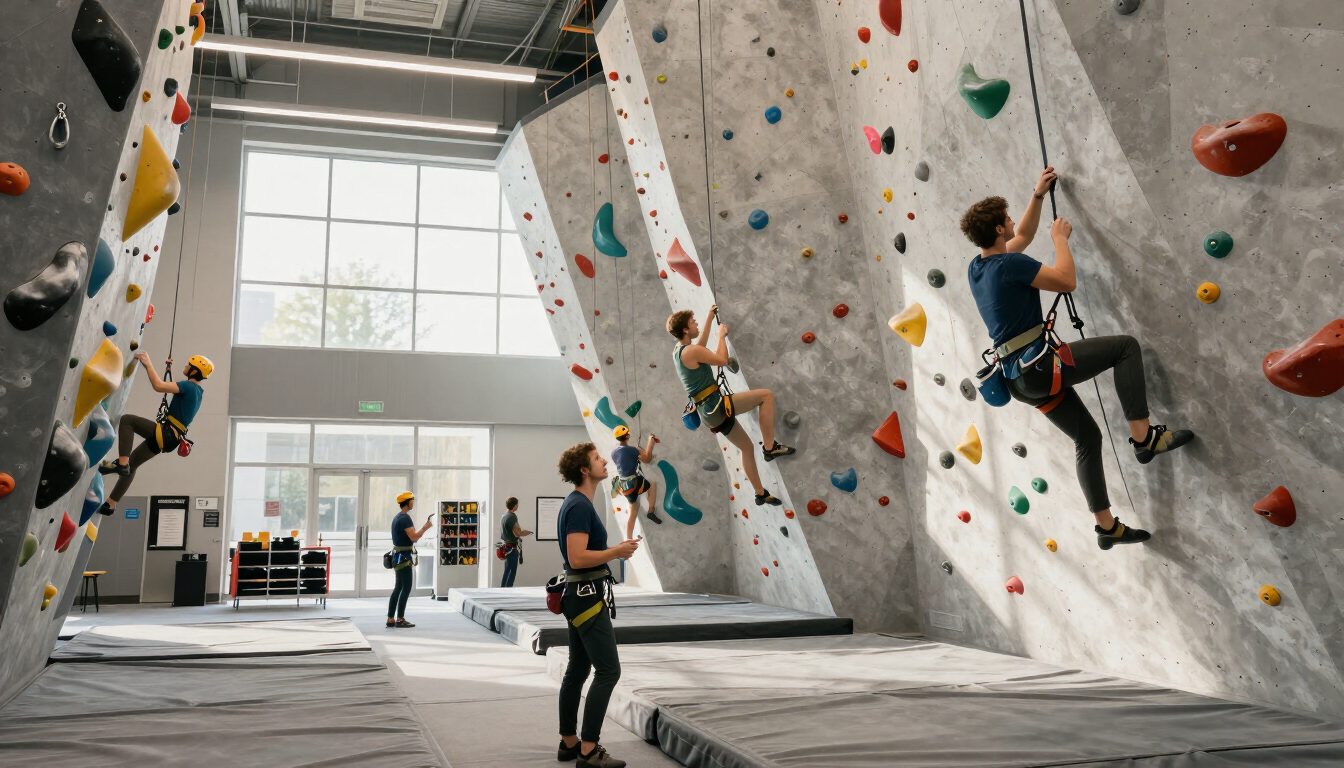
Bouldering and indoor climbing gyms carry an injury profile unlike a typical fitness centre, and this difference needs to be the starting point for any conversation about insurance. In a conventional gym, a fall or a drop is generally treated as an unwanted exception — something that shouldn't happen if equipment is used correctly and members follow basic safety guidance. In a climbing gym, falls — even controlled falls onto padded matting — are a routine and expected part of the activity itself. Climbers fall off bouldering walls regularly as part of normal training and progression, not as an unusual incident. This isn't a flaw in how the activity is run; it's simply the nature of the sport. But it does mean your insurance needs to reflect that falls are a built-in feature of your facility's operation, not an aberration.
Insurers assess risk based on what actually happens at a facility day to day, and a bouldering or climbing gym presents a meaningfully different picture to a standard fitness centre with treadmills and resistance machines. Getting your policy structured around this reality, rather than treating climbing as an add-on to a generic gym policy, is the foundation of proper cover for this kind of business.
Public Liability: The Starting Point, With Real Specifics Attached
Public Liability is the starting point for any climbing gym, covering injury to members and visitors arising from your facility's operations. This includes the obvious scenarios — a climber falling awkwardly off a wall and suffering an injury, a visitor being struck by a falling object, or a member injuring themselves on poorly maintained equipment — but the specifics of how your facility operates matter a great deal in how this cover is structured and priced.
Insurers will want to understand the height of your walls, because fall distance is directly related to injury severity and likelihood. They'll want to know what matting system is in place — the depth, type, and coverage of your padding all factor into how a fall is likely to be absorbed, and inadequate matting relative to wall height is a red flag that affects both your risk profile and your premium. They'll also want to understand your induction process for new climbers. A facility that runs a structured, mandatory induction before a first-time climber is allowed on the wall is in a different risk position to one that allows walk-in access with minimal orientation. Each of these factors should be discussed openly with your broker, because they directly shape how your policy is built and what it will respond to.
Roped Climbing and Auto-Belay Systems Introduce a Different Risk Category
Auto-belay systems, along with equipment used for top-rope or lead climbing, introduce an equipment-failure dimension that a pure bouldering gym simply doesn't carry. Bouldering risk is largely about fall height and landing surface. Roped climbing risk includes all of that, plus the mechanical reliability of belay devices, the condition of ropes and harnesses, the competence of belayers (whether staff or fellow climbers), and the protocols in place for checking equipment before each session.
If your facility offers a mix of bouldering and roped climbing — which many do, particularly larger commercial gyms — it's essential that both activities are explicitly declared to your insurer. Treating roped climbing as simply an extension of your bouldering operation, without separately flagging the equipment and supervision considerations involved, can leave a meaningful gap in your cover. An insurer who has priced your policy based on bouldering risk alone may not have factored in the additional exposure that auto-belay systems, harness use, and belay-dependent climbing introduce. This is a conversation worth having explicitly and in detail, covering exactly which systems you run, how often equipment is inspected, and what training your staff and members receive before using roped climbing areas.
Children's Programs Bring Their Own Set of Considerations
Children's programs are common in climbing gyms, whether structured as birthday parties, school holiday programs, junior development squads, or casual family sessions. These bring their own considerations that sit somewhat apart from your standard adult climbing risk profile.
Supervision ratios matter significantly here — how many staff are overseeing how many children at any given time, and whether that ratio changes for different age groups or skill levels. Harness fitting for younger climbers is another specific consideration, since children's bodies and the equipment designed to fit them safely require a different level of attention than fitting an adult harness. Parental waivers and consent processes also factor into how an insurer assesses your overall risk, particularly given that minors cannot generally sign their own waivers, and the legal position around parental consent and liability differs from claims involving adult members.
If your climbing gym runs any youth-focused programming, it's worth walking your broker through exactly how these sessions are staffed, supervised, and documented, so that your policy properly reflects this part of your business rather than treating it as identical to your general adult membership base.
Competitions and Events Need Their Own Conversation
If your gym runs competitions, comp nights, or grading-style events — whether informal in-house comps or larger sanctioned competitions — it's worth asking specifically whether Event Cover needs to sit alongside your standard policy. Competition settings often bring higher attendance, external participants who aren't regular members, increased intensity as climbers push for performance under competition conditions, and sometimes spectators in areas not typically used for general access.
A standard day-to-day policy built around your regular operating hours and typical member base may not automatically extend to cover the different risk profile a competition night introduces. This is similar to the position event-running businesses across the broader fitness industry find themselves in — the regular policy covers regular operations, but a distinct event with its own format and attendance pattern often needs to be specifically addressed, either through an extension to your existing policy or a standalone Event Cover arrangement for the date in question.
Property Cover for a Wall-Based Business
Beyond liability, Property cover deserves real attention for a climbing gym given the scale of the physical investment involved. Climbing walls, holds, matting systems, auto-belay units, and roped climbing infrastructure represent substantial capital investment — often far greater than the equipment footprint of a conventional gym. Damage to walls or matting, whether from normal wear, an isolated incident, or an event like fire or water damage, can be costly to remediate. Making sure your Property cover genuinely reflects the value and nature of this infrastructure, rather than being treated as an afterthought to your liability policy, is an important part of protecting the business itself.
Insurance Built Around How Your Gym Actually Operates
Gym & Fitness Insurance Brokers work with climbing and bouldering facilities to put together Public Liability and Property cover that reflects the specific equipment and activities your gym runs — your wall heights, your matting systems, your mix of bouldering and roped climbing, your children's programs, and your event calendar — rather than a generic fitness centre policy that assumes treadmills and weights are the extent of what happens on your floor.
Disclaimer
This content is general information only and does not constitute legal or insurance advice. Coverage requirements vary based on each business’s activities and risk profile, and policy terms and exclusions apply.
For fitness businesses seeking industry-specific guidance, gym insurance brokers provide advice and insurance solutions aligned with real-world fitness operations and unstaffed access risk exposure.