
Health Club and Wellness Centre Insurance: Saunas, Ice Baths and Recovery
Insuring the Modern Recovery Add-Ons
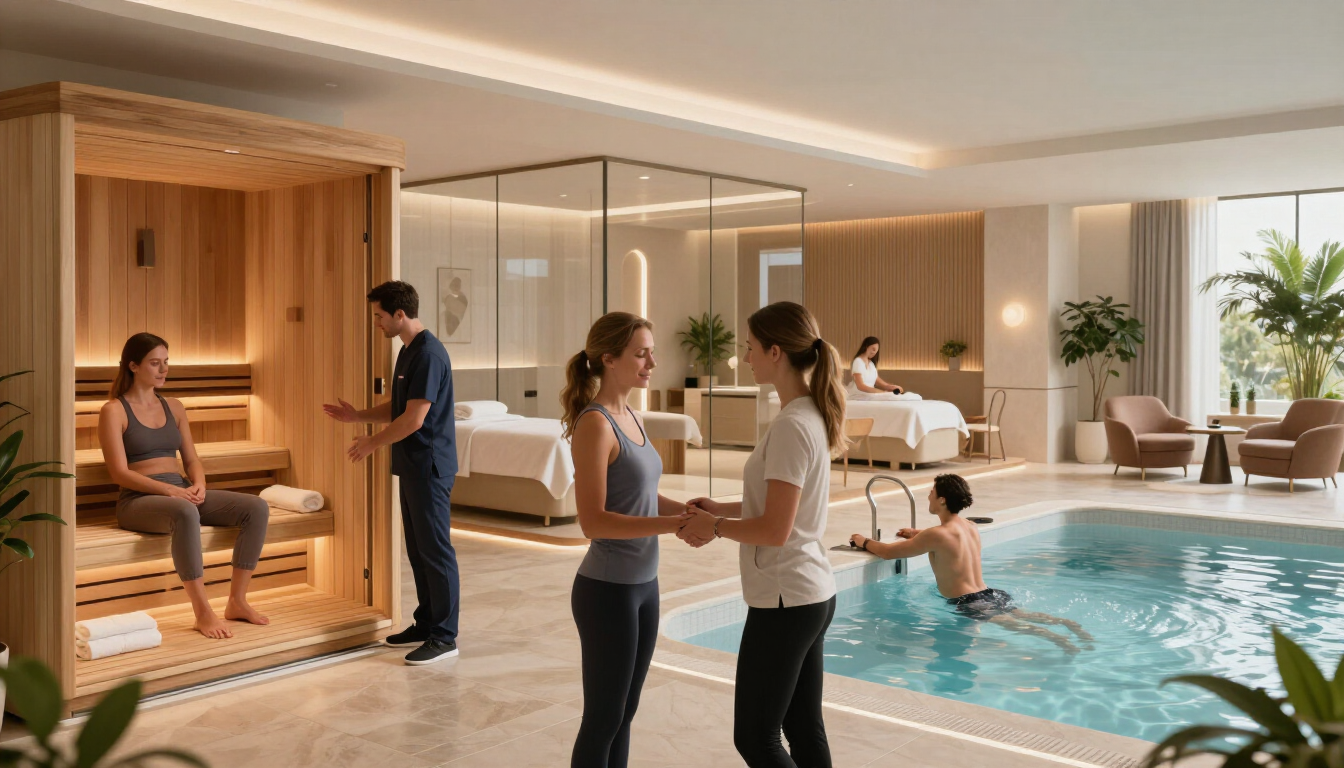
Health clubs and wellness centres increasingly offer more than weights and cardio. Saunas, ice baths, infrared therapy, float tanks, and dedicated recovery lounges have become standard inclusions across a growing number of Australian facilities, reflecting a broader shift in how members think about fitness — not just training hard, but recovering properly afterward. This evolution is good for members and good for business, but each of these additions introduces a risk consideration that's genuinely different from the risk profile of a traditional gym floor, and each one is something your insurer needs to know about specifically.
It's easy to think of these recovery offerings as a relatively low-risk addition compared to weight training or high-intensity classes. In some respects they are. But the specific risks involved — extreme temperature exposure, enclosed wet environments, and in some cases hands-on therapeutic services — are different enough from standard gym risk that they deserve their own dedicated attention when you're arranging or reviewing your insurance.
Heat and Cold Therapy: A Genuinely Different Risk Category
Heat and cold therapy in particular carry specific risks that don't have an equivalent on a typical gym floor. Saunas and infrared therapy involve sustained heat exposure, which carries a risk of burns, dehydration, and heat-related medical episodes, particularly for members who spend longer in these environments than is advisable or who have underlying health conditions that make heat exposure riskier than they realise. Ice baths and cold plunge facilities carry the inverse risk — hypothermia-related incidents, cardiovascular stress from sudden cold exposure, and the genuine possibility of a medical episode being triggered in members with undisclosed heart conditions or other relevant health issues.
This is a meaningfully different risk conversation to the kind of incident a standard gym policy is typically built around. Insurers will want to understand what screening or waiver process you have in place before members use these facilities. Do new members complete a health questionnaire before being given access to the sauna or ice bath? Are there clear time limits posted and enforced for sauna and cold plunge use? Is there a process for members to disclose relevant health conditions before using these facilities, and do staff have any visibility into who may be at higher risk? These questions matter because the answers directly affect how an insurer assesses your exposure, and a wellness centre that can demonstrate a thoughtful screening and disclosure process is in a stronger position than one that simply makes these facilities available without any structured process around them.
Wet Areas Bring Standard but Important Slip-and-Fall Considerations
Wet areas — saunas, plunge pools, showers, and the surrounding floor surfaces — also raise standard slip-and-fall considerations that should be reflected in your premises risk assessment and communicated clearly to your broker. While these risks are more familiar to insurers than the temperature-specific risks discussed above, they shouldn't be treated as an afterthought simply because they're a well-understood category.
The flooring material around wet areas, the presence and visibility of warning signage, the frequency of cleaning and maintenance checks, and the general layout of these spaces all factor into how a slip-and-fall incident might be assessed if a claim arises. A wellness centre with multiple wet-area facilities — a sauna, a plunge pool, and adjoining shower areas, for example — has a larger footprint of this risk than a standard gym with a single shower block, and this is worth reflecting accurately when discussing your premises with your insurer rather than understating the scope of your wet-area facilities.
Treatment Rooms Bring Professional Indemnity Into the Picture
If your wellness centre includes treatment rooms for massage, remedial therapy, or other hands-on services, Professional Indemnity becomes relevant alongside Public Liability, since these services involve direct physical intervention with a client rather than simply providing access to equipment or facilities. This is a meaningful distinction from the rest of your wellness centre operation.
A massage therapist or remedial practitioner working with a client is exercising professional judgement and technique with every session — assessing the client's presenting issue, applying pressure and manipulation in specific ways, and making real-time decisions about what's appropriate for that particular client's body and condition. If a client experiences an adverse outcome and attributes it to the treatment received, this is a professional services claim, not a general premises incident, and it sits with Professional Indemnity rather than Public Liability. Wellness centres that have expanded into hands-on treatment services without updating their insurance to reflect this addition may find themselves relying on cover that was never designed to respond to this category of claim.
Property Cover for Specialist Equipment
Property cover should reflect the capital cost of specialist equipment — ice bath chillers, infrared panels, float tanks, sauna heating units — which can represent a significant investment well beyond the cost of standard gym equipment like treadmills or weight racks. A commercial-grade ice bath chiller system or a properly fitted infrared sauna installation is a substantial outlay, and float tanks in particular represent one of the more expensive single pieces of equipment a wellness centre is likely to install.
If your Property cover was originally set up around a standard gym fit-out and hasn't been revisited since you added these recovery services, there's a meaningful risk that your sum insured no longer reflects the true value of what's actually on your premises. This is worth reviewing specifically rather than assuming your existing Property cover automatically scales up to account for newer, higher-value additions to your facility.
Bundling Cover for a Multi-Service Business
A Business Pack bundling Public Liability, Property, and Professional Indemnity is usually the most efficient way to cover a multi-service wellness centre that's grown beyond a single-purpose gym floor. Rather than managing several separate policies with different renewal dates and different points of contact, a Business Pack brings these elements together under a single, coordinated arrangement. For a wellness centre offering recovery facilities, hands-on treatments, and general fitness services all under one roof, this consolidated approach also makes it easier to ensure nothing falls through the gap between policies — a real risk when a business has grown organically and added services over time without a corresponding review of its insurance structure.
Insurance That Reflects Your Full Range of Services
Gym & Fitness Insurance Brokers can help you put together cover that reflects your full range of services, not just the gym floor. As wellness centres continue to expand into recovery, therapy, and holistic services, the insurance conversation needs to expand alongside them — covering the heat and cold therapy risks, the wet-area considerations, the professional services exposure from treatment rooms, and the genuine capital value of your specialist equipment, all properly accounted for under one coordinated policy.
Disclaimer
This content is general information only and does not constitute legal or insurance advice. Coverage requirements vary based on each business’s activities and risk profile, and policy terms and exclusions apply.
For fitness businesses seeking industry-specific guidance, gym insurance brokers provide advice and insurance solutions aligned with real-world fitness operations and unstaffed access risk exposure.