
24/7 Gyms: What Changes When the Lights Stay On?
The Insurance Realities of Unstaffed Hours Most Owners Underestimate
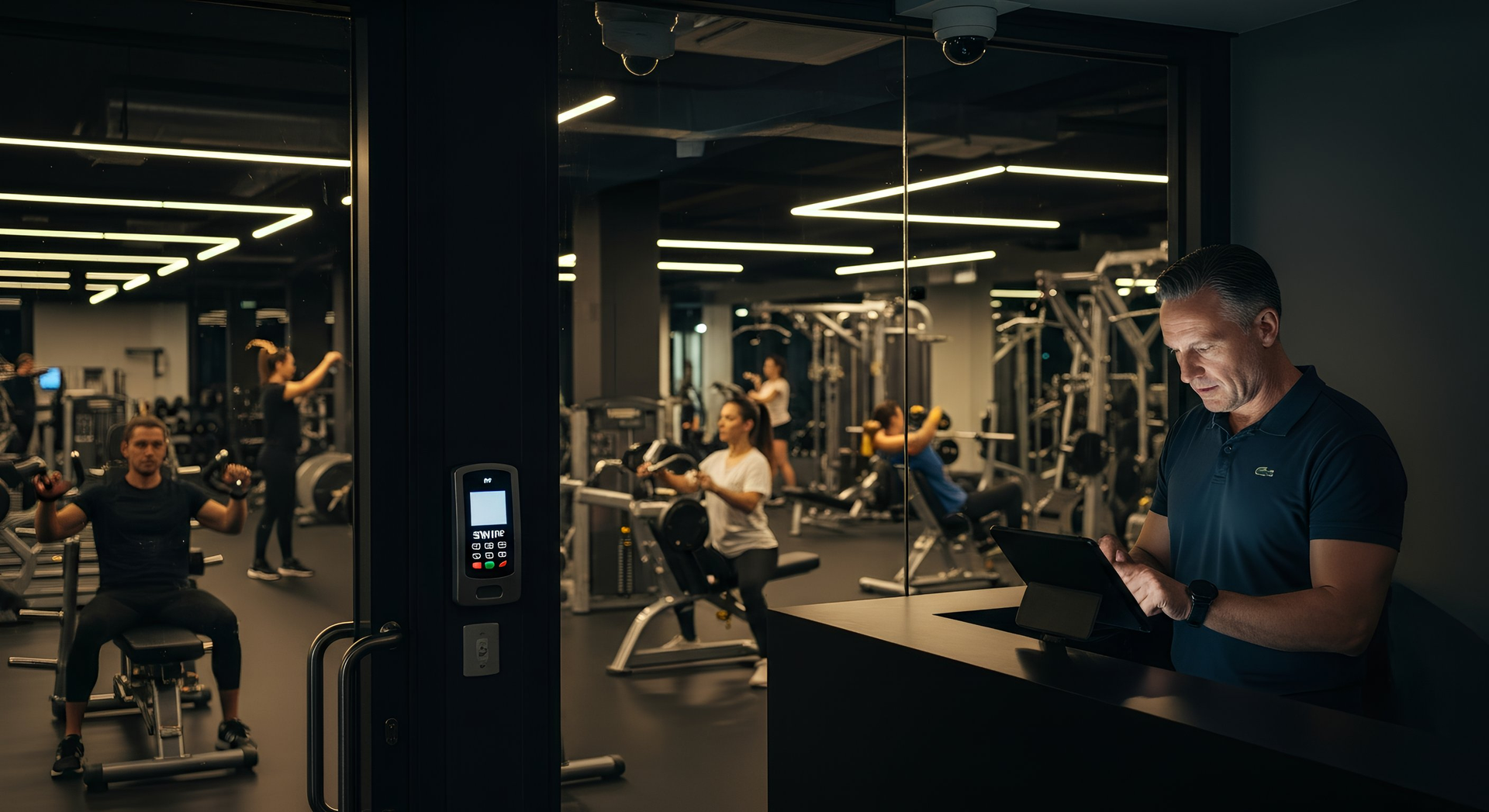
Running a 24/7 gym isn’t just an operational decision.
It’s a structural shift in your risk profile.
Extended access is attractive. Members value flexibility. Revenue improves. The business model scales efficiently.
But the moment your facility operates without staff supervision, your exposure changes — whether your insurance reflects that change or not.
And that’s where many owners step into uncertainty without realising it.
Let’s look at what genuinely changes when your gym never closes.
Supervision Is a Risk Control — Remove It and Risk Increases
During staffed hours, risk is moderated by human oversight.
Staff can:
- Correct unsafe technique
- Intervene in inappropriate behaviour
- Respond immediately to medical incidents
- Identify equipment misuse
- Manage conflicts
When a facility transitions to unstaffed access, that active supervision disappears.
From an underwriting perspective, this is not a minor adjustment. It is a material change.
Insurers assess risk based on probability and severity. Reduced supervision increases both.
If your policy was structured assuming staffed operation only, and you later introduce 24/7 access without notifying your broker or insurer, you may face complications during a claim.
Insurance contracts rely on accurate disclosure.
Operating model changes must be reflected in the policy.
Access Control Is Not Optional — It’s Foundational
A genuine 24/7 facility must implement strict access controls.
This includes:
- Individual swipe or fob entry
- Logged access records
- Time-stamped data
- Remote lockdown capability
If an incident occurs at 2:13am, insurers will ask:
Who was in the facility?
How did they gain entry?
Was access monitored?
If your system cannot produce verifiable logs, evidentiary defence becomes weaker.
Access control is not simply a convenience feature. It is a defensible risk management mechanism.
CCTV: Protection or Illusion?
CCTV cameras mounted for aesthetics are not sufficient.
Effective surveillance requires:
- Adequate camera coverage (no blind spots)
- Clear resolution
- Proper lighting
- Retention of footage for an appropriate period
- Remote access capability
In the event of a claim, footage may determine liability.
If a member alleges negligence due to unsafe equipment, recorded evidence may confirm whether equipment was misused, modified, or handled incorrectly.
However, if cameras were non-functional, poorly positioned, or footage was not retained, that defence opportunity disappears.
Insurance does not replace operational diligence.
It works in conjunction with it.
Medical Events in Unstaffed Hours
One of the most sensitive exposures in 24/7 facilities involves medical incidents.
Consider:
- Cardiac events
- Fainting or collapse
- Severe musculoskeletal injury
- Head trauma
Without staff onsite, response depends on:
- Panic buttons or duress alarms
- Emergency contact protocols
- Clear signage
- Member induction education
Insurers may assess whether reasonable steps were taken to mitigate foreseeable risk.
A well-designed 24/7 facility includes visible emergency instructions and accessible response systems.
An unprepared facility simply assumes members will manage themselves.
Assumptions are not a defence strategy.
Equipment Misuse and Vandalism
Unstaffed hours can increase the likelihood of:
- Improper use of specialised equipment
- Unauthorized guests
- Equipment tampering
- Theft
- Property damage
Some policies include conditions specific to unstaffed operation — such as alarm systems, monitored security, and periodic patrols.
If those conditions are not met, cover may be limited or subject to dispute.
The insurance industry does not penalise growth.
But it does require transparency and risk controls proportionate to exposure.
Contractor and Trainer Considerations
If personal trainers operate during unstaffed periods, liability lines must be clear.
Questions to consider:
Are trainers employees or independent contractors?
Do they carry their own insurance?
Are they authorised for after-hours sessions?
Is their access tracked separately?
Ambiguity in these areas can complicate claim responsibility.
Clear contractual documentation and proper insurance structuring prevent grey areas from becoming expensive disputes.
The Policy Endorsement Most Owners Forget
Many insurers require a specific endorsement for 24/7 operation.
Without it, coverage may technically apply only during staffed hours.
This detail is often buried in policy schedules.
Owners rarely review the wording after renewal. They rely on habit.
But habit does not replace contractual review.
If you transitioned to 24/7 in the past few years and never revisited your policy wording, it would be prudent to confirm your coverage alignment.
Liability Limits Matter More After Hours
Severity does not decrease because it is midnight.
In fact, claims arising from unstaffed environments can become more complex.
Delayed response times may influence alleged damages.
Litigation may explore whether the absence of supervision contributed to injury severity.
Selecting adequate public liability limits becomes even more important when operating around the clock.
Lower premiums achieved through reduced limits often appear economical — until they are tested.
The Cultural Shift Required
Successful 24/7 operators understand something fundamental:
Insurance is not the primary safeguard.
Risk management is.
Insurance responds after an event.
Operational discipline prevents events.
Clear induction processes, structured member onboarding, visible emergency protocols, and robust security systems create a defensible framework.
When those controls exist and are documented, insurance functions as intended — as a financial backstop.
Without them, insurance becomes reactive and potentially strained.
Ask Yourself Honestly
If an incident occurred tonight at 1:45am:
- Could you produce entry logs immediately?
- Is your CCTV fully functional and retained?
- Does your policy explicitly recognise 24/7 operation?
- Have you disclosed this operational model to your insurer?
- Are emergency response systems visible and working?
If any answer is uncertain, you have an alignment gap.
Gaps are rarely visible until they are tested.
Final Perspective
Operating 24/7 is a strong business strategy when structured correctly.
But extended hours are not merely a marketing feature.
They are an underwriting factor.
The difference between being insured and being properly protected often comes down to disclosure, documentation, and operational discipline.
When your systems, supervision strategy, and policy wording align, 24/7 becomes a strength — not a vulnerability.
The lights can stay on.
Just make sure your protection does too.
Disclaimer
This content is general information only and does not constitute legal or insurance advice. Coverage requirements vary based on each business’s activities and risk profile, and policy terms and exclusions apply.
For fitness businesses seeking industry-specific guidance, gym insurance brokers provide advice and insurance solutions aligned with real-world fitness operations and unstaffed access risk exposure.